
A Guide to Forklift Truck Accident Claims in Scotland
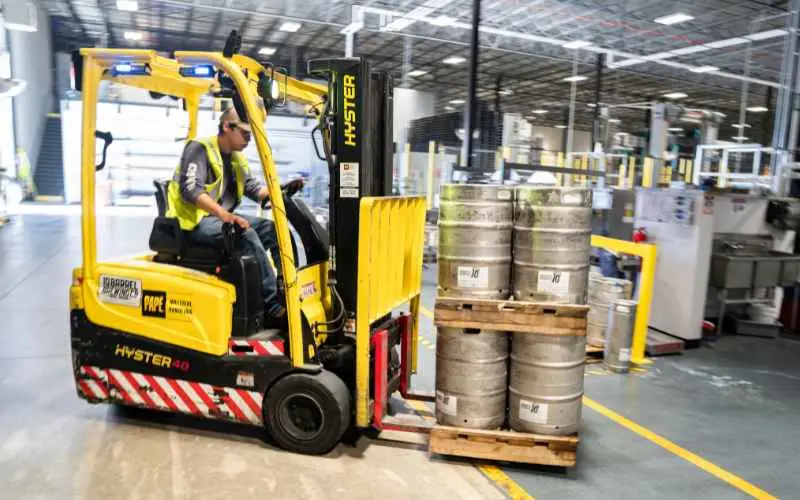
A Guide to Forklift Truck Accident Claims in Scotland Contact Us Forklift trucks move almost everything in Scotland’s warehouses, factories, ports and yards. A loaded counterbalance truck can weigh several tonnes, yet it’s often driven in tight aisles, just metres from people on foot. When things go wrong, the injuries are rarely minor. Crushed feet, broken legs, pelvic and spinal injuries are common. The Fork Lift Truck Association estimates that around 1,300 people in the UK are killed or seriously injured in forklift accidents each year. Across all industries in Great Britain, being struck by a moving vehicle caused 24 worker deaths in 2025/26, according to provisional HSE figures. This guide explains how forklift accident claims work in Scotland. Contact Us Read Our Guide Table of Contents Where forklift accidents happen? Forklifts are used far beyond the traditional warehouse. We hear about accidents at: distribution centres around Eurocentral, Bellshill and the M8 corridor ports and harbours such as Grangemouth, Leith, Dundee and Aberdeen whisky bonds and bottling plants in Speyside, Fife and the Central Belt builders’ merchants, timber yards and garden centres food processing and drinks factories farms, sawmills and recycling yards retail stockrooms and supermarket back-of-house areas Common types of forklift accident: Most forklift accidents fall into a few familiar groups: pedestrians struck by a reversing or turning truck. See our guide to pedestrians hit by forklifts operators hurt in overturns, especially when cornering at speed, on ramps or with a raised load loads falling from the forks onto the operator or people nearby crush injuries between the truck and racking, walls or other vehicles falls from forks or pallets when people are lifted on them, which should never happen feet run over in busy yards and loading bays falls from loading bays when a truck drives off the edge or a trailer moves What employers must do? Employers have a duty to take reasonable care for the safety of their workers. With forklifts, that means managing three things: the people, the trucks and the workplace. People. Operators must be properly trained and authorised. The HSE’s Approved Code of Practice for rider-operated lift trucks, known as L117, sets out three stages of training: basic, specific job and familiarisation. Our guide to forklift training failures explains this in detail. Trucks. Forklifts must be suitable for the job and properly maintained. Under the Provision and Use of Work Equipment Regulations 1998 and the Lifting Operations and Lifting Equipment Regulations 1998, they need regular checks and periodic thorough examination by a competent person. Workplace. Traffic routes must be planned so that pedestrians and vehicles are kept apart wherever possible. That means marked walkways, barriers, crossing points, mirrors, good lighting and speed limits. Since October 2013, a claim must show negligence rather than relying on a breach of the rules alone. But courts still use these regulations and the HSE’s guidance to judge what a careful employer should have done. Who can I claim against? You bring the claim as the pursuer. The person or company you claim against is the defender. In most cases that’s your employer, whose employers’ liability insurance will cover the claim. Sometimes someone else is responsible, such as: another company whose driver hit you at a shared site or port a haulier whose trailer moved while it was being loaded the occupier of premises where you were visiting or delivering a hire company that supplied a defective truck If your employer gave you a forklift with a defect, they may be responsible even if the fault was the manufacturer’s, under the Employers’ Liability (Defective Equipment) Act 1969. Injuries and compensation: Forklift injuries are often serious and slow to heal. Common ones include crushed feet and ankles, fractures to the legs and pelvis, back and spinal injuries, head injuries, and, in the worst cases, amputations. In Scotland, damages are split into two parts. Solatium covers your pain, suffering and the effect on your life. Financial losses cover lost wages, future loss of earnings, care from family, travel, treatment and adaptations. If you can’t go back to operating trucks or warehouse work, future losses can make up a big part of the claim. What to do after a forklift accident? Get medical help and make sure the cause is recorded. Report it in the accident book and ask for a copy. Note the truck and its fleet number, and the driver’s name. Ask about CCTV. Most warehouses have cameras, and many trucks now record too. Footage is often overwritten quickly. Take photos of the area, walkways, barriers and lighting. Get witness details from colleagues. Make a Claim Today Our reputation for excellence in personal injury law is unparalleled, having secured over £3 million in compensation for our clients. We are committed to achieving the best possible outcomes, consistently delivering exceptional results and ensuring our clients receive the justice they deserve. Free Claim Check Request A Callback 0333 3051 337 Time limits and no win, no fee You usually have three years from the date of the accident to raise court proceedings, under the Prescription and Limitation (Scotland) Act 1973. Most claims settle without a hearing. If not, claims up to £100,000 start in the sheriff court, often the All-Scotland Sheriff Personal Injury Court in Edinburgh. Larger claims can go to the Court of Session. Most forklift compensation claims can be funded through a Success Fee Agreement. If you lose, you pay no fee. If you win, the success fee is capped by law at 20% of the first £100,000, 10% of the next £400,000 and 2.5% of anything above £500,000, with VAT included. In personal injury claims, outlays such as medical reports and court dues are generally met by the provider, except for any after-the-event insurance premium. Your agreement should set out exactly what you’ll pay. FAQs I was driving the forklift. Can I still claim? Yes, if the accident was caused by poor training, a faulty truck, an unsafe layout or pressure to work too fast. Your damages